
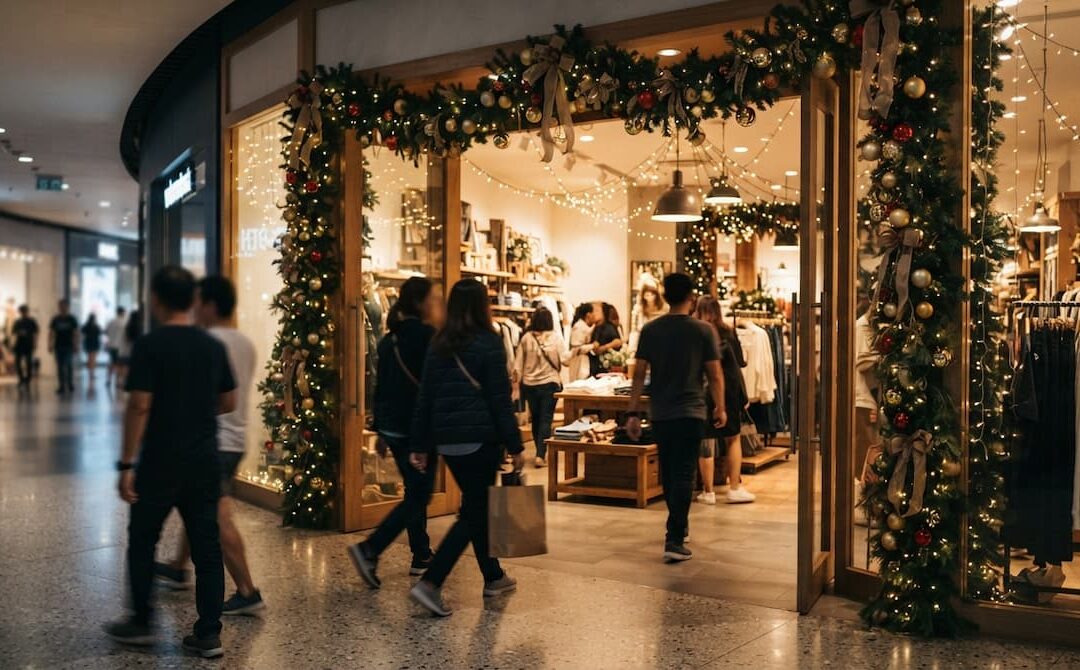
In short: To prepare stores for festive season retail, plan three things together: staff, queues and stock. Use footfall data to roster people for the busiest hours, watch queue length and waiting time so you can open tills before lines form, and check stock accuracy before the rush. Then review results weekly until Chinese New Year.
Festive season retail in Southeast Asia is a long stretch rather than a single busy weekend. The 11.11 and 12.12 sales, Christmas and New Year all fall within about seven weeks, and Chinese New Year follows soon after. In this guide, Integrated Retail, which serves retailers in Singapore, Malaysia, Thailand and Indonesia, looks at the three things that decide how a store performs at peak: staffing, queues and stock.
What does the 2026 festive season look like in Southeast Asia?
Festive season retail is the year-end trading period when footfall, sales and pressure on store teams are at their highest. In Southeast Asia, it usually runs from early November into the new year.
Shoppers are spending carefully this year. In Singapore, retail sales rose just 0.7% year on year in August 2026, according to the Department of Statistics Singapore, as reported by Marketing-Interactive. Online sales made up 15.7% of the total. In other words, most spending still happens offline. In Malaysia, Retail Group Malaysia expects 4.7% growth in the third quarter and 3.8% for 2026 as a whole, The Star reported in September 2026.
Physical stores matter at peak, too. In Indonesia, the government’s BINA Indonesia Great Sale ran from 18 December 2025 to 4 January 2026 with retail and mall associations HIPPINDO and APPBI. It recorded Rp31 trillion in transactions, according to the Coordinating Ministry for Economic Affairs, as reported by IDX Channel in January 2026.
Timing also differs by market. In a FedEx survey of consumers who buy from European sellers, run in September 2025, 34% of Singapore respondents started holiday shopping in October. By contrast, 44% of Indonesian respondents planned to start in December, against an Asia-Pacific average of 19%.
Why do shoppers leave stores empty-handed at peak?
Most lost sales at peak come from a few familiar problems. Zebra Technologies’ 18th annual Global Shopper Study (2025) surveyed over 4,200 shoppers, retail decision-makers and store associates worldwide. More than half of shoppers (52%) said they had left a store empty-handed in the past three months. The figure for Asia Pacific was 47%.
The reasons are worth noting. Of shoppers who left without items, 42% said the item was out of stock, and 25% said the checkout line was too long. Meanwhile, nearly half of associates said they had little time to help customers. These are global and regional figures, not Southeast Asian data. Even so, they map neatly onto the three areas below.
Free consultation
Will your stores hold up at peak?
Out of stock and queues too long are the two reasons shoppers walk out — and both are visible in your data before they cost you a trading weekend. We’ll show you where to look.
How many staff do you need on the floor at peak?
Start with traffic, not last year’s roster. A people counter records how many visitors enter each hour, so you can see when demand really peaks. You can then compare footfall with the number of staff on shift.
A useful measure here is the shopper-to-staff ratio. It is the number of visitors per hour divided by the number of staff on the floor in that hour. If the ratio climbs sharply at certain hours, those are the hours to strengthen first.
For example, you may find that weekend afternoons need more cover than weekday mornings. However, every store is different, so let your own data decide. Our earlier post on retail staff scheduling with footfall data covers this in more detail.
Seasonal staff also need help to be useful quickly. Give them simple instructions, a short product briefing and one device they can learn in an hour. As a result, experienced colleagues stay with customers instead of answering questions.
How do you keep checkout queues under control?
Queue length is the number of people waiting to pay. Waiting time is how long each of them waits. Both rise fast at peak, and both are easy to miss from the back office.
Queue management systems measure these in real time. For example, FootfallCam’s Queue Control Suite monitors queue length, waiting time and service rate at each checkout, including self-checkout. It also forecasts queue build-up over the next 15 minutes and suggests actions, such as opening another counter. In one vendor-reported case study, a store of 8,500 sq ft cut average waiting time from 6.5 to 3.2 minutes.
Mobile POS helps too. With a tablet or handheld device, staff can take payment on the shop floor during the busiest hours. This is often called line-busting. Retail Pro, for instance, says Retail Pro Prism can be used on tablets and runs in the browser.
Finally, agree simple triggers in advance. For instance, decide how long a queue may get before a manager opens another till. That way, staff act at once rather than waiting for approval.
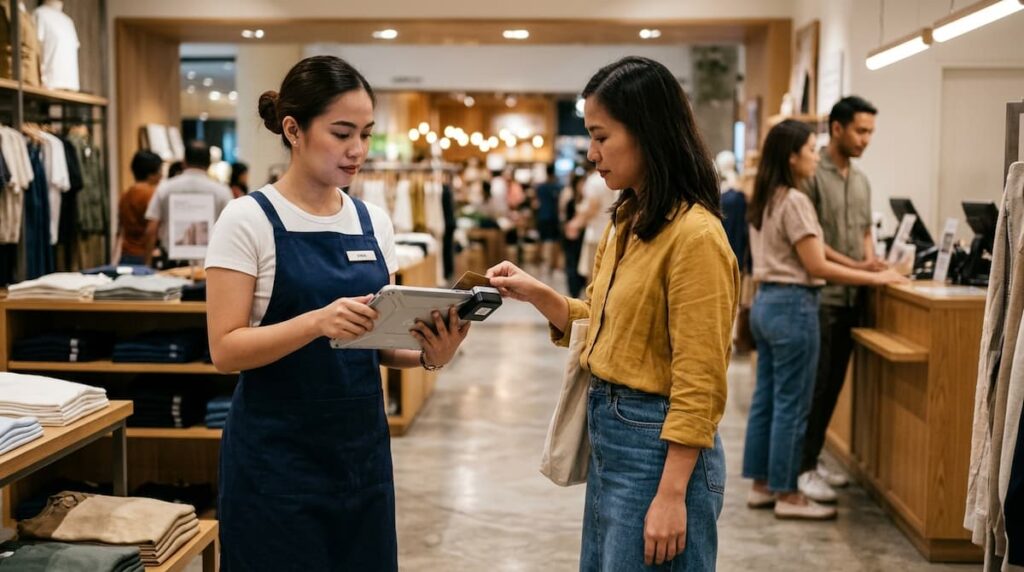
Taking payment on the shop floor keeps lines moving at peak.
How do you keep the right stock on the shelf?
Stock accuracy is the match between what your system says you hold and what is physically in the store. At peak, a wrong count costs time and sales. Staff search for items that are not there, while customers give up and leave.
So, run a count of your best-sellers before the rush, and fix any gaps you find. Next, set replenishment by sell-through rather than a fixed weekly delivery. Then give store teams a live view of stock in nearby stores and the warehouse. Cegid, for example, says Cegid Retail provides “a single, real-time view of your inventory”.
When an item is out of stock, staff can still save the sale. They can reserve it in another store, arrange delivery or offer a similar product. In short, good inventory visibility turns a “no” into a “yes”.
What should you measure in each area?
| Area | What to measure | How to measure it | When to act |
| Staffing | Visitors per hour and shopper-to-staff ratio | People counter plus staff rosters | Adjust rosters weekly from November |
| Queues | Queue length and waiting time per checkout | Queue management system or manual spot checks | Open tills at an agreed trigger, in real time |
| Stock | Stock accuracy and out-of-stocks on best-sellers | POS and inventory reports, cycle counts | Count before peak, then check daily |
| Results | Conversion rate and average basket value | People counter plus POS data | Review every Monday until Chinese New Year |
What should you check in the final week before peak?
- Rosters cover your busiest hours, based on footfall data.
- Every till, handheld and payment terminal has been tested.
- Queue triggers are agreed and every shift manager knows them.
- Best-seller stock has been counted and replenishment is booked.
- Seasonal staff have had their product briefing and device training.
How can Integrated Retail help with festive season retail?
Integrated Retail is an authorised reseller of FootfallCam people counting, and supplies Cegid Retail and Retail Pro Prism point of sale systems. Used together, people counting and POS data show how many visitors became buyers in each store. Our teams support retailers in Singapore, Malaysia, Thailand and Indonesia. If you want to check your stores are ready for festive season retail, contact Integrated Retail for a review.
Talk to us
There is still time before the busiest weeks
Tell us your busiest store. We’ll review staffing, queues and stock accuracy against your footfall, and tell you what to fix now — and what can wait until after the season.
Frequently asked questions
When does festive season retail start in Southeast Asia?
It usually starts with the 11.11 sales in early November and runs through 12.12, Christmas and New Year. Chinese New Year often follows, so the busy period can stretch into the first quarter.
How do I know how many staff to roster at peak?
Use a people counter to measure visitors per hour. Then compare that with staff on shift to find the hours with the highest shopper-to-staff ratio, and add cover there first.
What is a good way to reduce checkout queues?
Measure queue length and waiting time, set a clear trigger for opening another till, and use mobile POS to take payments on the shop floor during the busiest hours.
Why does stock accuracy matter more at peak?
Because a wrong count wastes staff time and loses sales when footfall is highest. Count best-sellers before the rush and give staff a live view of stock in other locations.